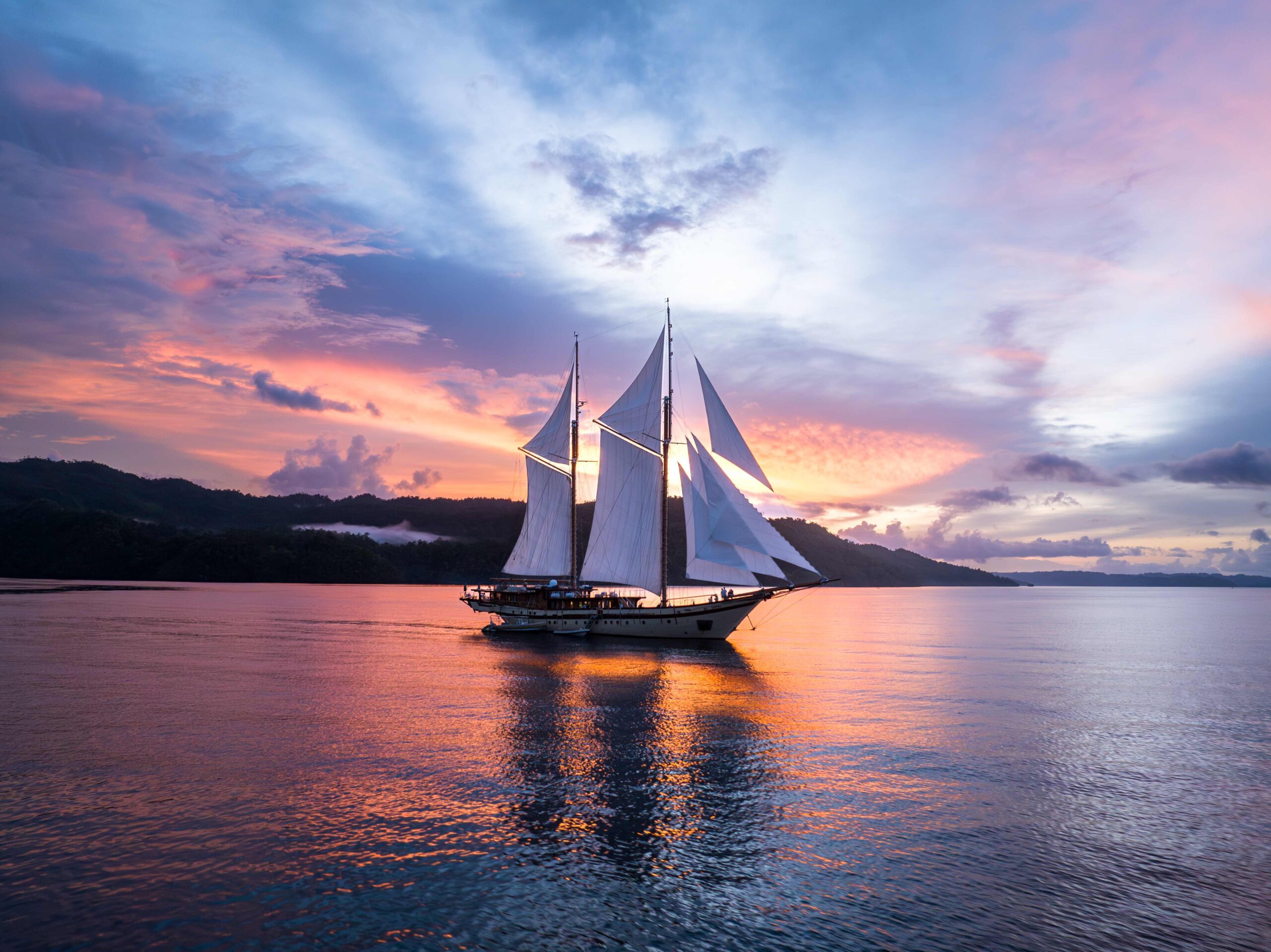
There are faster ways to move through Indonesia. Bigger ships. More modern hulls. Helicopters that leap from island to island in minutes. But none of them tells the story of the archipelago quite like a phinisi.
For centuries, these handcrafted wooden sailing vessels carried spices, textiles, and stories across the Indonesian seas. Built by the Bugis and Konjo shipbuilders of South Sulawesi, phinisi schooners were designed for long voyages through some of the most remote waters on earth — navigating monsoon winds, volcanic coastlines, and coral passages long before modern charts existed. Today, they remain one of the most evocative ways to experience Indonesia: not simply as a mode of transportation, but as part of the destination itself.
Aboard Lamima, one of the the world’s largest wooden sailing yachts, that heritage is reimagined through the lens of modern expedition travel.
-
Lamima’s Story of Tradition
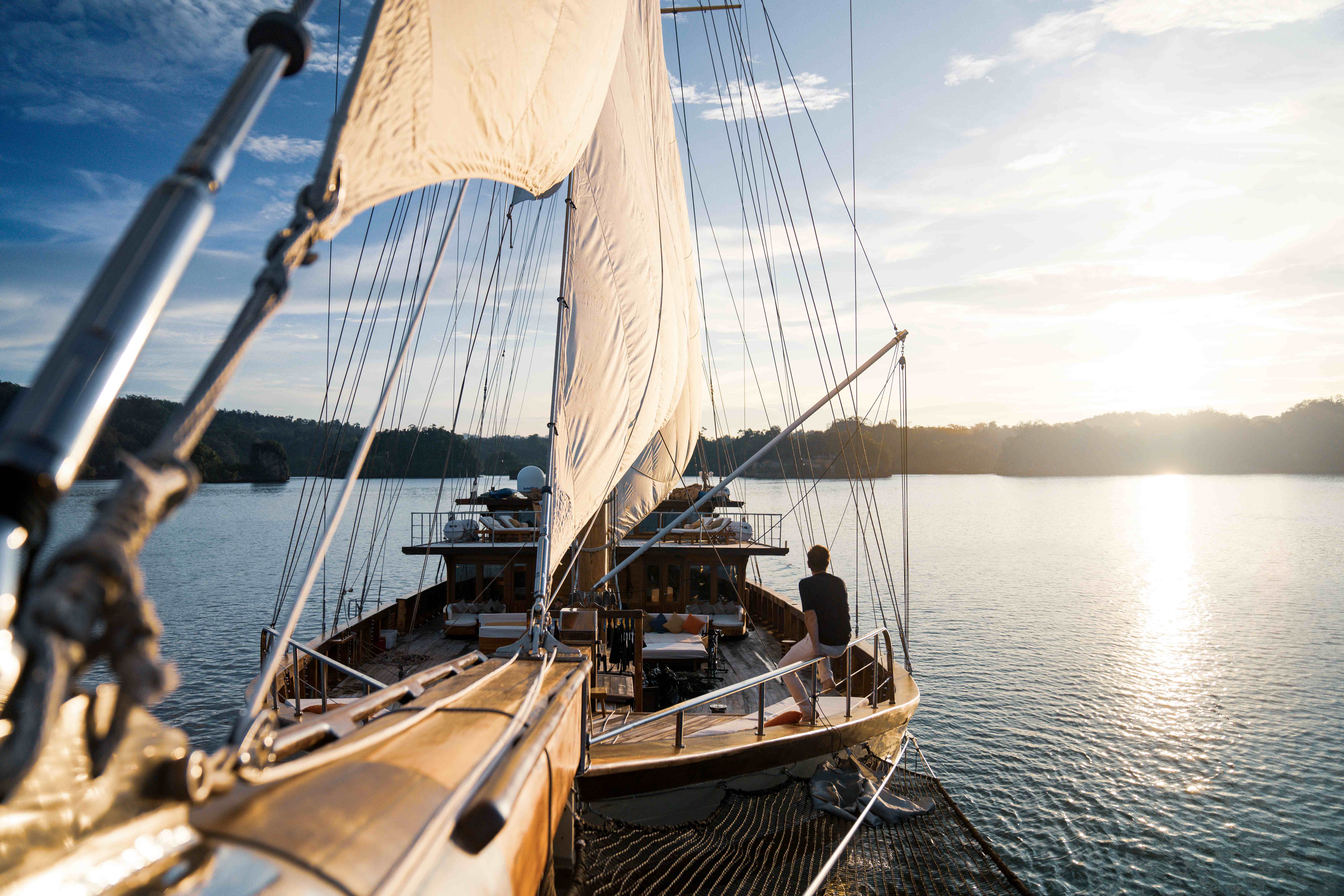
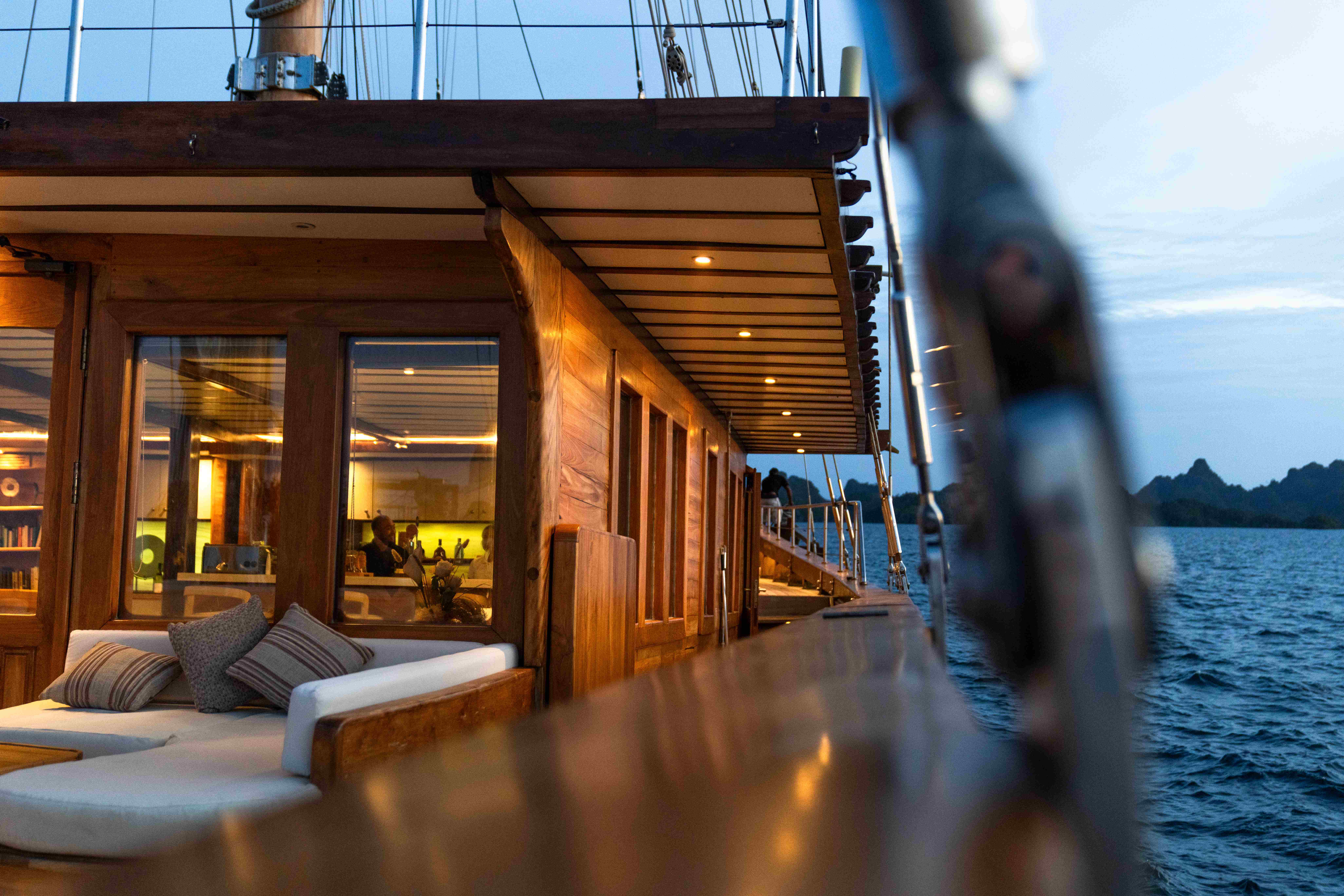
Stretching 65 meters, Lamima was built in the traditional phinisi style by master craftsmen in Sulawesi, blending centuries-old shipbuilding techniques with contemporary design, comfort, and capability. Her silhouette is unmistakable against the Indonesian horizon: towering masts, warm teak decks, and sails that still catch the trade winds as they have for generations. But unlike the trading vessels that once crossed these waters, Lamima was designed to take travelers deeper into Indonesia’s wildest corners without sacrificing comfort along the way.
-
The Islands of Indonesia
In a country made up of more than 17,000 islands, access changes everything.
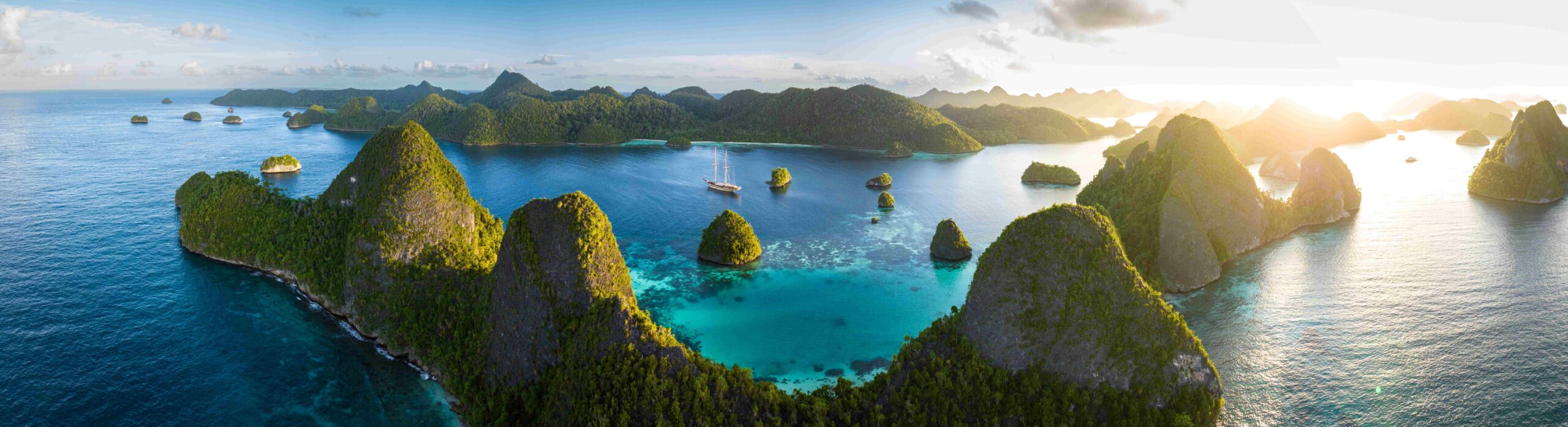
Indonesia is not a destination best experienced from a single resort or a domestic flight schedule. The most extraordinary places — the empty beaches of Raja Ampat, the dragon-haunted islands of Komodo, the volcanic fjords of Flores, the whale-rich waters of Alor, the hidden surf breaks of Sumba — are often separated by days of travel and entirely disconnected from conventional infrastructure. A phinisi changes that equation entirely. Your hotel moves with you. So does your dining room, your dive platform, your private terrace, and your front-row seat to the shifting landscapes of the archipelago.
Each morning begins somewhere new.
One day might start with coffee on deck beneath the limestone karsts of Raja Ampat before snorkeling untouched reefs alive with manta rays and clouds of anthias. Another could mean hiking Komodo Island at sunrise alongside the world’s largest lizard before sailing overnight toward a remote volcanic coastline where few outsiders ever arrive. The rhythm of phinisi sailing is dictated not by roads or airports, but by weather, tides, and curiosity — the same forces that shaped these routes centuries ago.
That flexibility is what makes Lamima uniquely suited to expeditionary travel. With shallow draft access, long-range cruising capabilities, and a highly experienced Indonesian crew, she can reach islands and anchorages inaccessible to larger vessels. EYOS itineraries aboard Lamima are built around that freedom. Rather than following rigid cruise schedules, voyages are shaped around conditions, wildlife encounters, cultural opportunities, and the interests of the guests aboard.
In Raja Ampat, that might mean adjusting course to spend more time with a pod of dolphins riding the bow or detouring toward an uninhabited island for a beach barbecue beneath the stars. In Komodo National Park, it could mean kayaking through mangrove forests at low tide or diving sites that see only a handful of boats each season. Further east, voyages through the Banda Sea and Spice Islands trace some of the oldest maritime trade routes on earth. They are journeys where early explorer history, volcanic landscapes, and extraordinary marine biodiversity intersect.
-
A More Intentional Travel
But part of the magic of phinisi sailing is that the journey itself never disappears into the background.
Unlike larger expedition ships, where movement often feels mechanical, sailing aboard Lamima keeps you connected to the sea. You hear the creak of timber, the rush of water against the hull, the flap of canvas in the wind. Sunrises arrive slowly across open decks. Remote villages appear on the horizon long before you reach them. Distances feel tangible. Indonesia unfolds gradually rather than all at once.
That is ultimately the appeal of phinisi sailing: not just where it takes you, but how it changes your relationship with the places in between. In Indonesia, the sea has always been the connective tissue of the nation. To travel by phinisi is to experience the archipelago the way generations of sailors once did — carried by wind, guided by the horizon, and always aware that the voyage itself is part of the story.