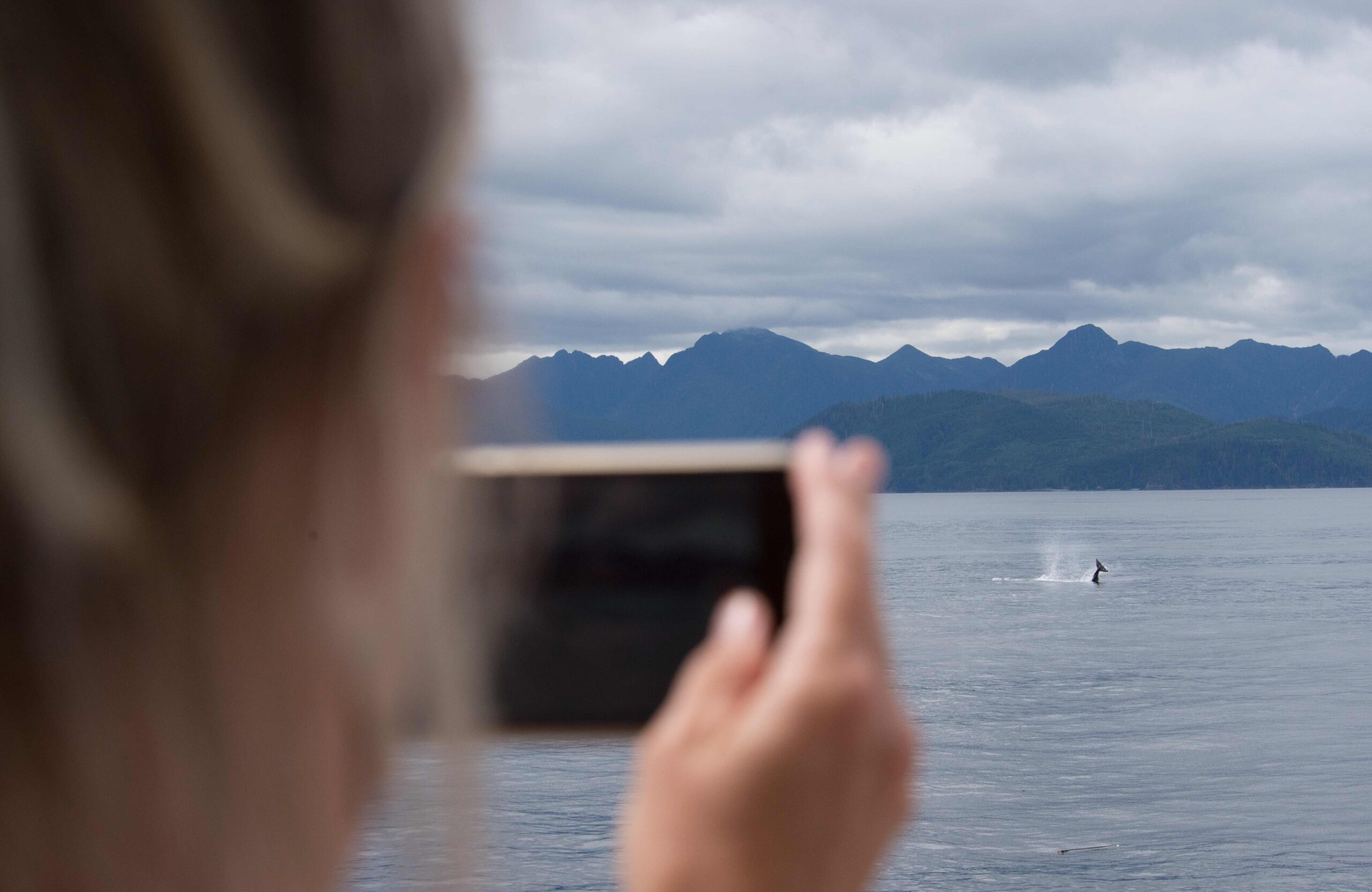
There are places where wildlife is something you hope to see, and then there’s Alaska’s Inside Passage, where it feels inevitable. A labyrinth of fjords, forested islands, and glacial channels, this stretch of Southeast Alaska becomes one of the richest feeding grounds on Earth each summer. Nutrient-dense waters draw in marine megafauna, while salmon runs pull terrestrial predators to the shoreline. It’s a seasonal convergence that is brief, intense, and wildly cinematic. For those exploring by expedition yacht, far from the churn of cruise traffic, these are the five encounters that define the experience.
-
Humpback Whales
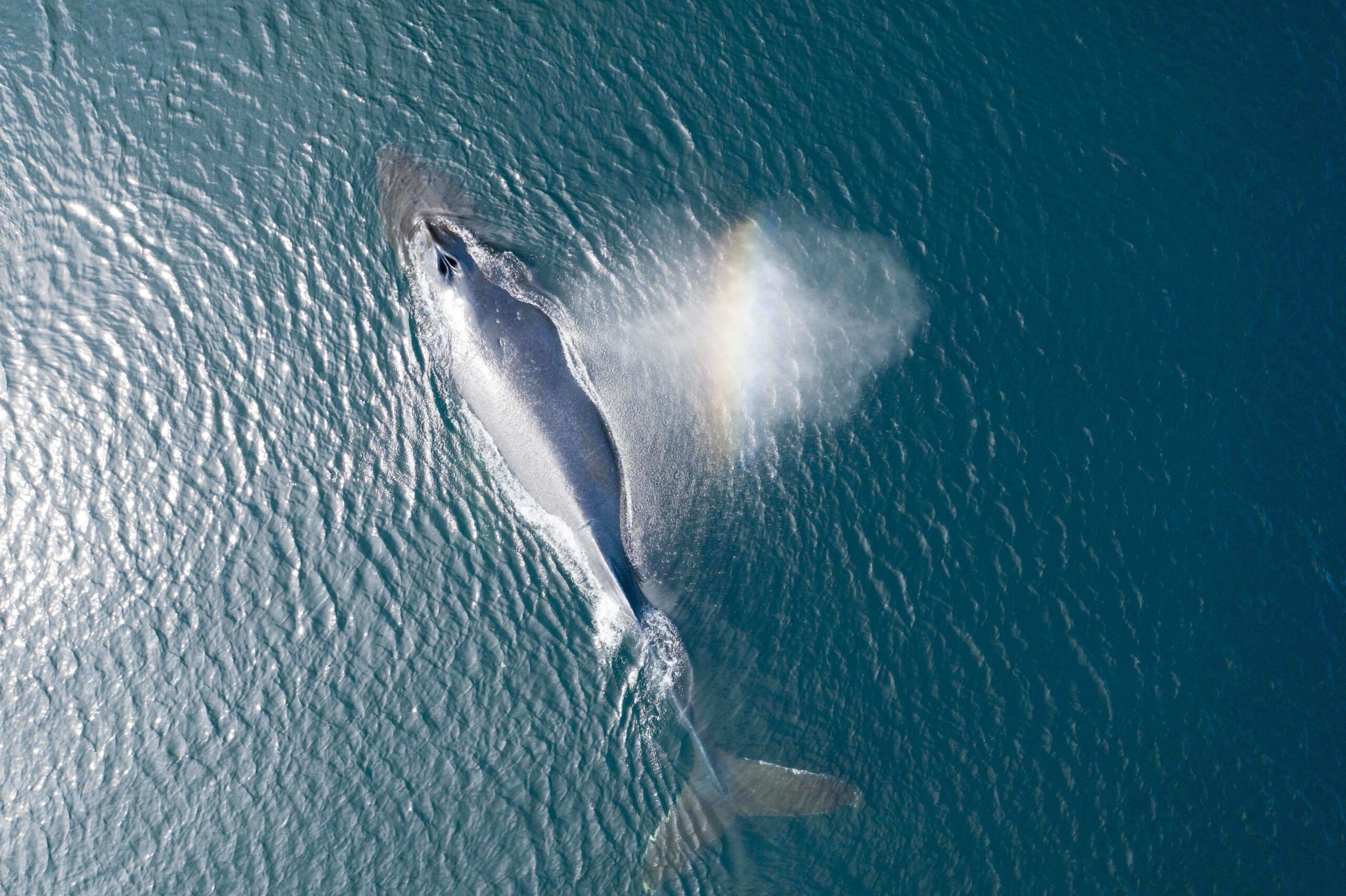
You’ll often hear them before you see them. A low exhale and a plume of mist. Then the slow rise of a fluke before it slips beneath the surface. Summer in the Inside Passage is peak feeding season for humpbacks, with hundreds of whales gathering to take advantage of dense schools of fish and krill.
In certain areas, particularly Frederick Sound and Stephens Passage, whales exhibit cooperative bubble-net feeding—a coordinated behavior in which groups release spirals of bubbles to concentrate prey before lunging upward. It’s a rare phenomenon globally, but one that can be observed with some consistency in Southeast Alaska.
Peak season runs from June through August, when sightings are both frequent and dynamic.
-
Steller Sea Lions
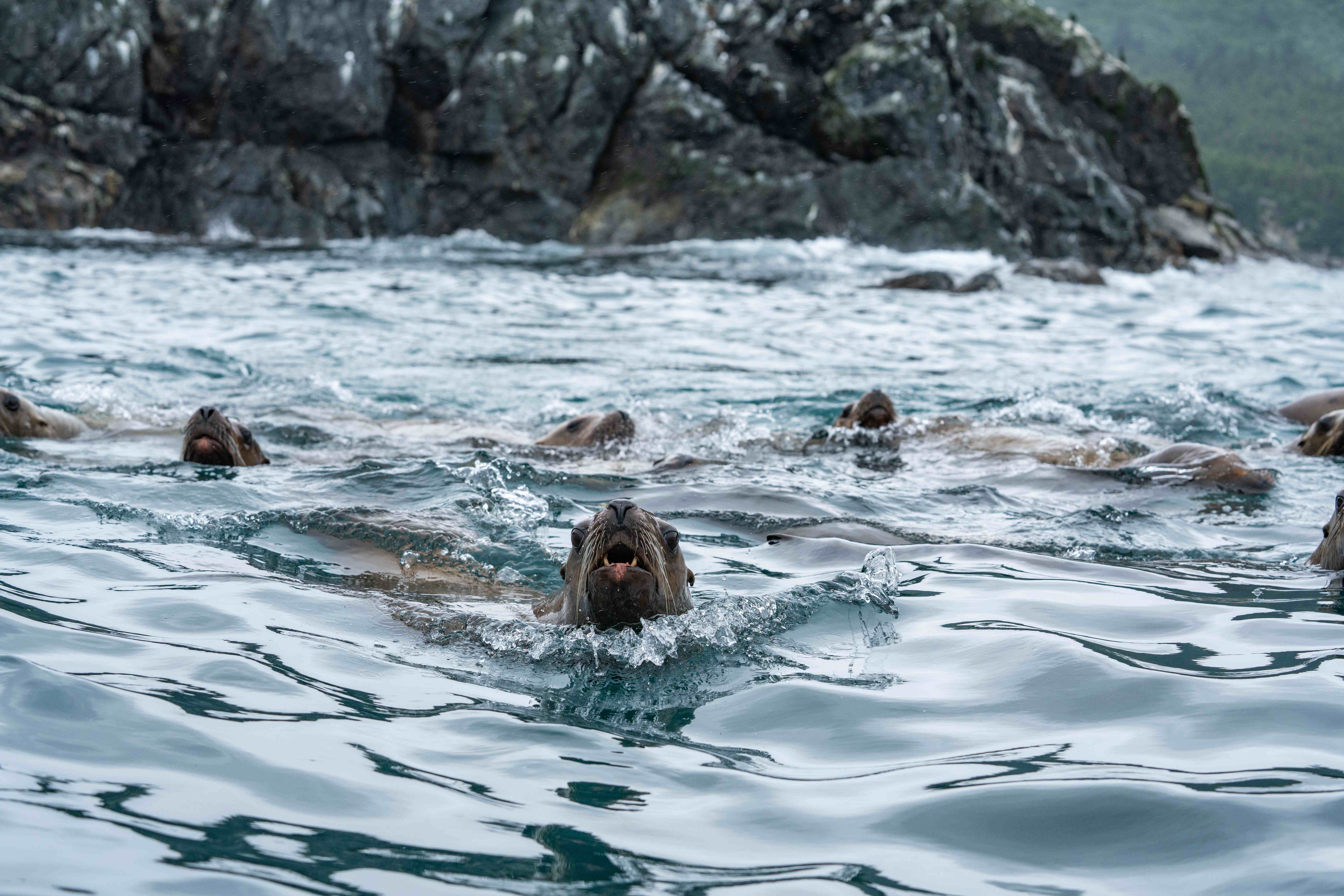
Steller sea lions, the largest of their kind at over 2,000 pounds, are a common presence along the outer coastlines of the Inside Passage. They gather in large numbers at haul-out sites along the outer coastlines of the Inside Passage. You’ll see them piled on top of each other atop rocky outcrops where they rest and socialize between feeding periods.
In areas like the Inian Islands, strong tidal currents create nutrient upwellings that attract fish such as herring and pollock. Sea lions concentrate here to feed, moving through fast, turbulent water with surprising agility despite their size. They surge through boiling water with movements somewhere between clumsy and perfectly adapted.
Steller sea lions remain in the region year-round, but summer offers the most reliable access and calmer conditions for observation.
-
Bald Eagles
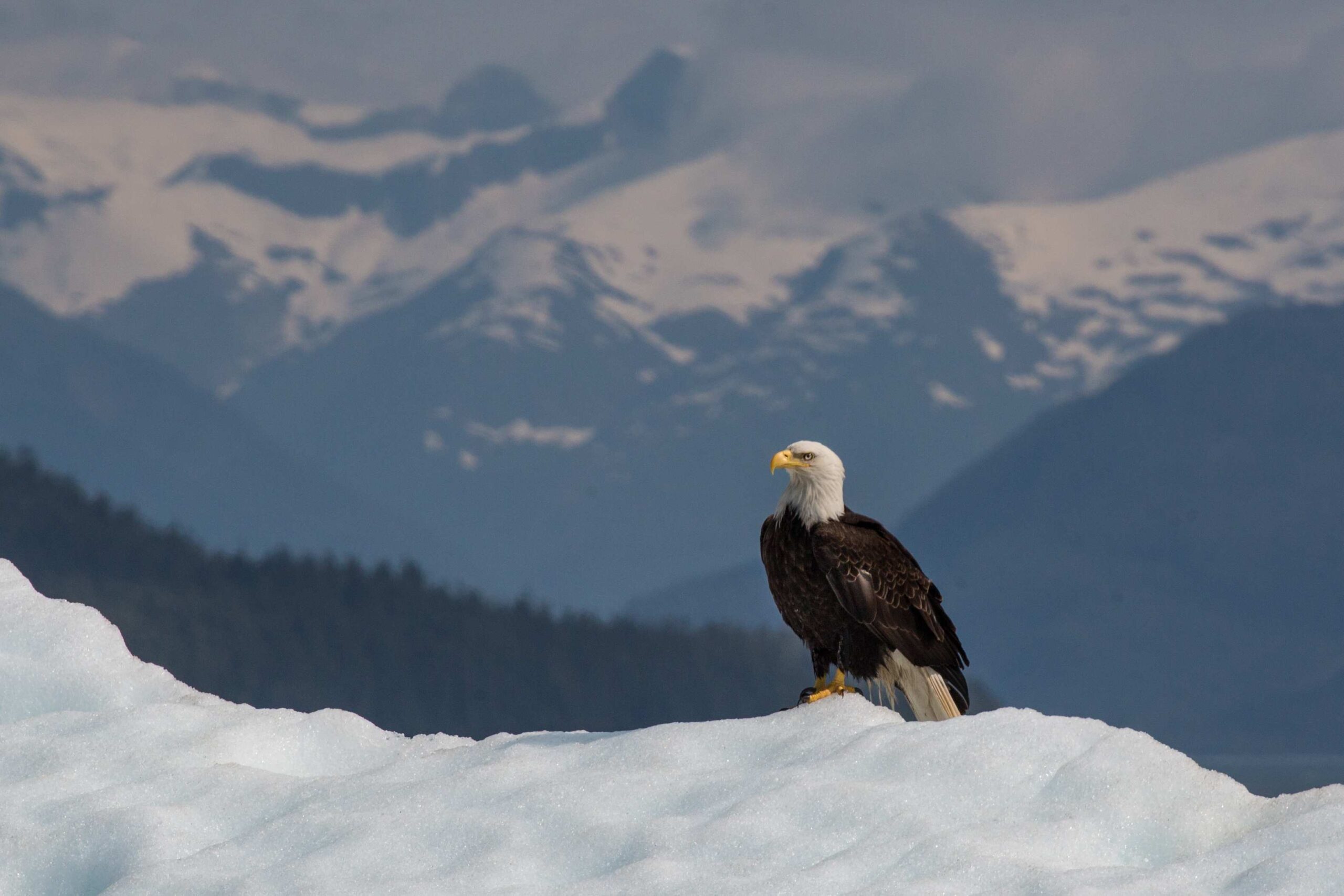
They are everywhere and yet never ordinary. Southeast Alaska supports one of the highest densities of bald eagles in the world. The region’s extensive old-growth forests provide nesting sites, while abundant marine and river ecosystems supply a steady food source. During the summer, bald eagles are commonly seen along shorelines, estuaries, and river systems, where they feed on fish, seabirds, and carrion. As salmon runs begin in mid-to-late summer, eagle activity increases significantly, particularly near spawning streams. They are present year-round, but visibility and activity are highest during the summer months due to longer daylight hours and increased food availability.
-
Brown Bears
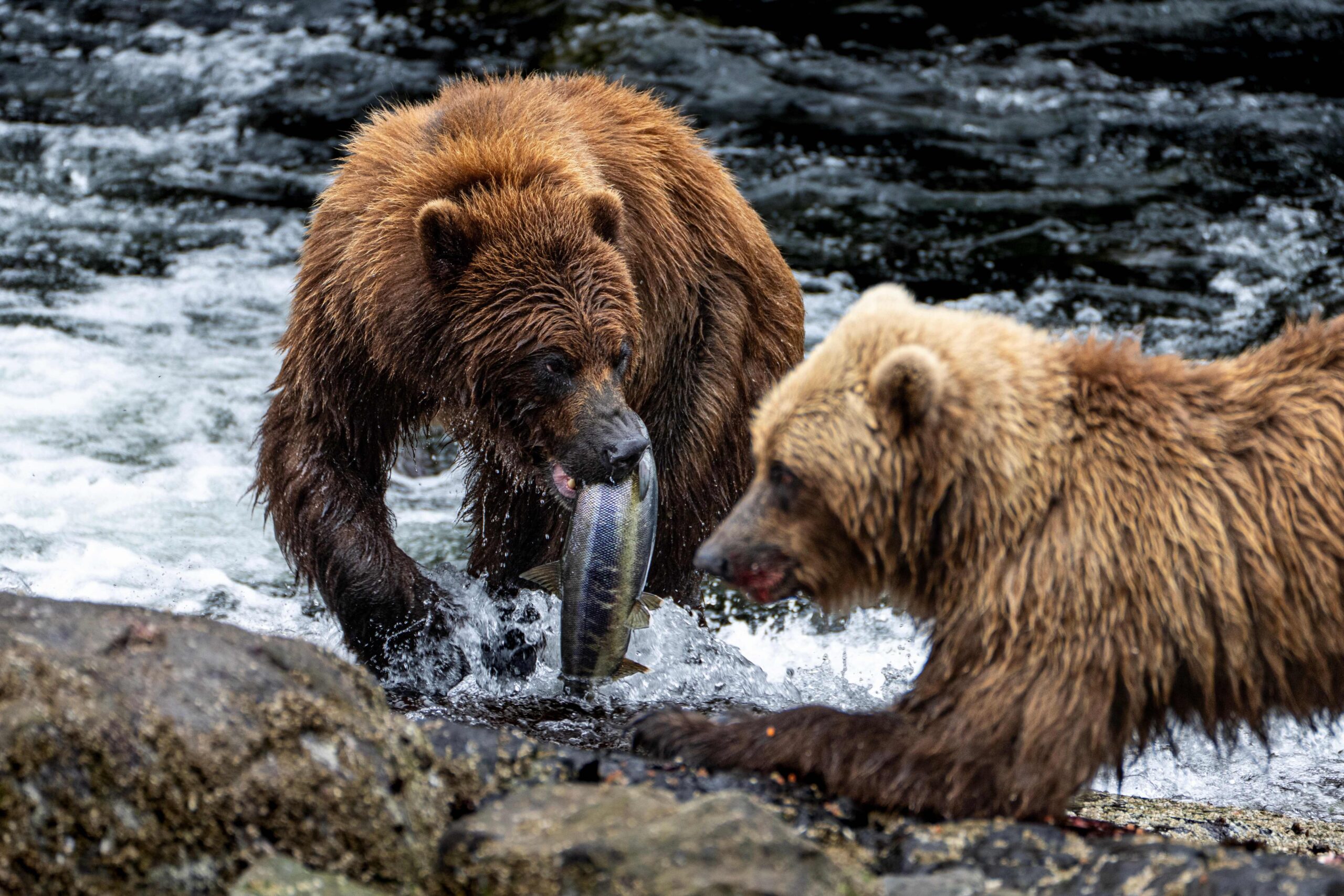
Coastal brown bears in the Inside Passage are among the largest in the world, supported by a diet rich in marine nutrients. Their movements through the landscape are closely tied to seasonal food availability.In early summer, bears forage along tidal flats, feeding on grasses, sedges, and intertidal life such as clams. As salmon begin to return to freshwater systems—typically from July onward—they shift toward rivers and streams, where fishing becomes the primary focus.
These transitions create some of the most reliable viewing opportunities, particularly in estuaries and known salmon corridors. Encounters are often quiet and observational, defined as much by patience as proximity.
-
Sea Otters
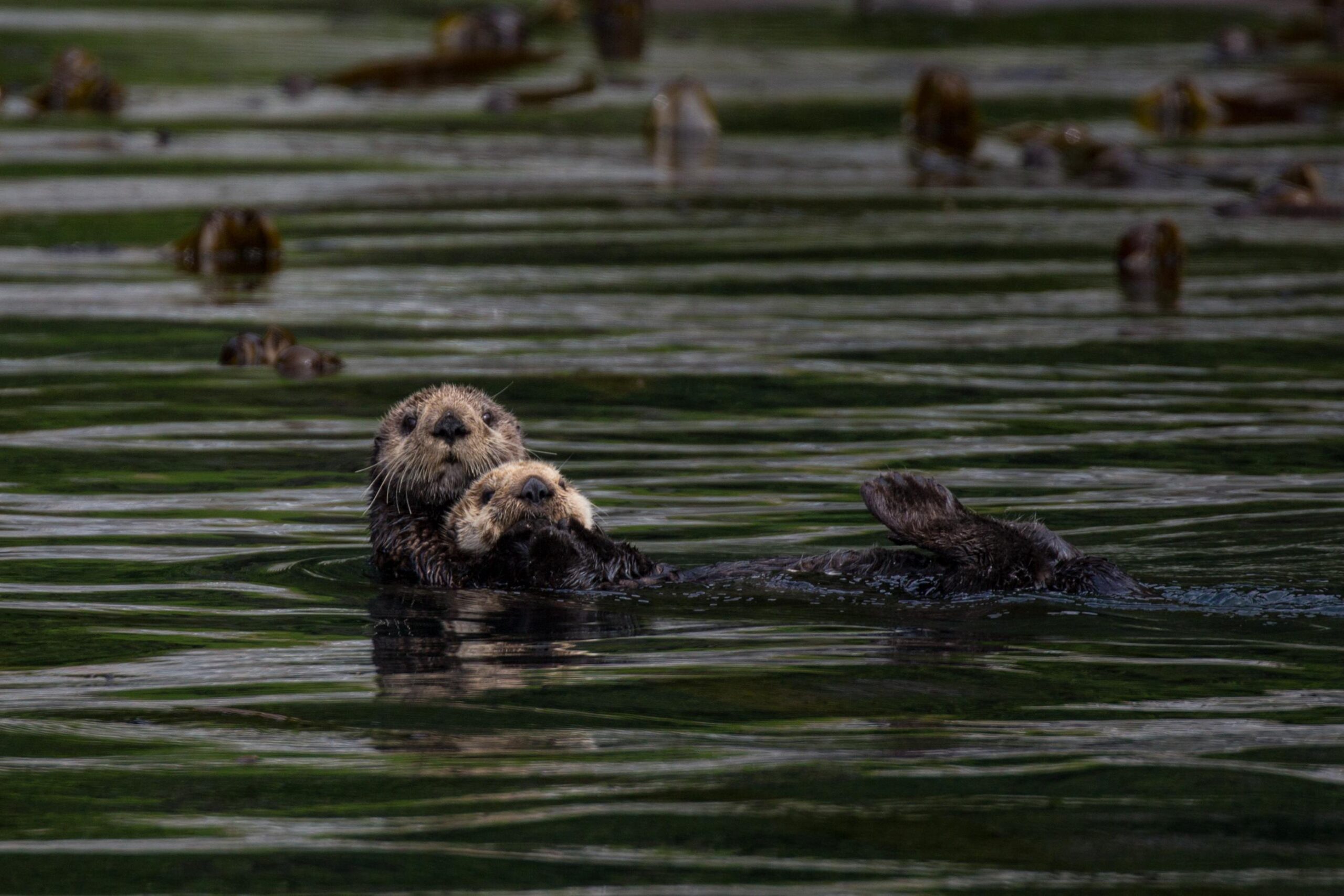
Sea otters are a consistent presence in the sheltered waters of the Inside Passage, most often found in nearshore kelp forests that provide both food and shelter. They feed on invertebrates such as sea urchins, crabs, and mollusks, often using rocks as tools to break open shells.
They are also a keystone species: by controlling sea urchin populations, sea otters help maintain the health of kelp ecosystems. Frequently seen in groups known as rafts, they drift, feed, and rest on the surface—seemingly relaxed, but closely tied to the balance of the environment around them. Summer’s calmer seas make them particularly easy to observe.
-
A Living System
What makes the Inside Passage extraordinary isn’t just the individual sightings – it’s how interconnected they are. Whales arrive for the same reason sea lions do. Bears gather where salmon run. Eagles follow both. Even the otters, drifting in kelp forests, are part of the same intricate web. Travel here in summer, and you are not only observing wildlife but also stepping into a living system.
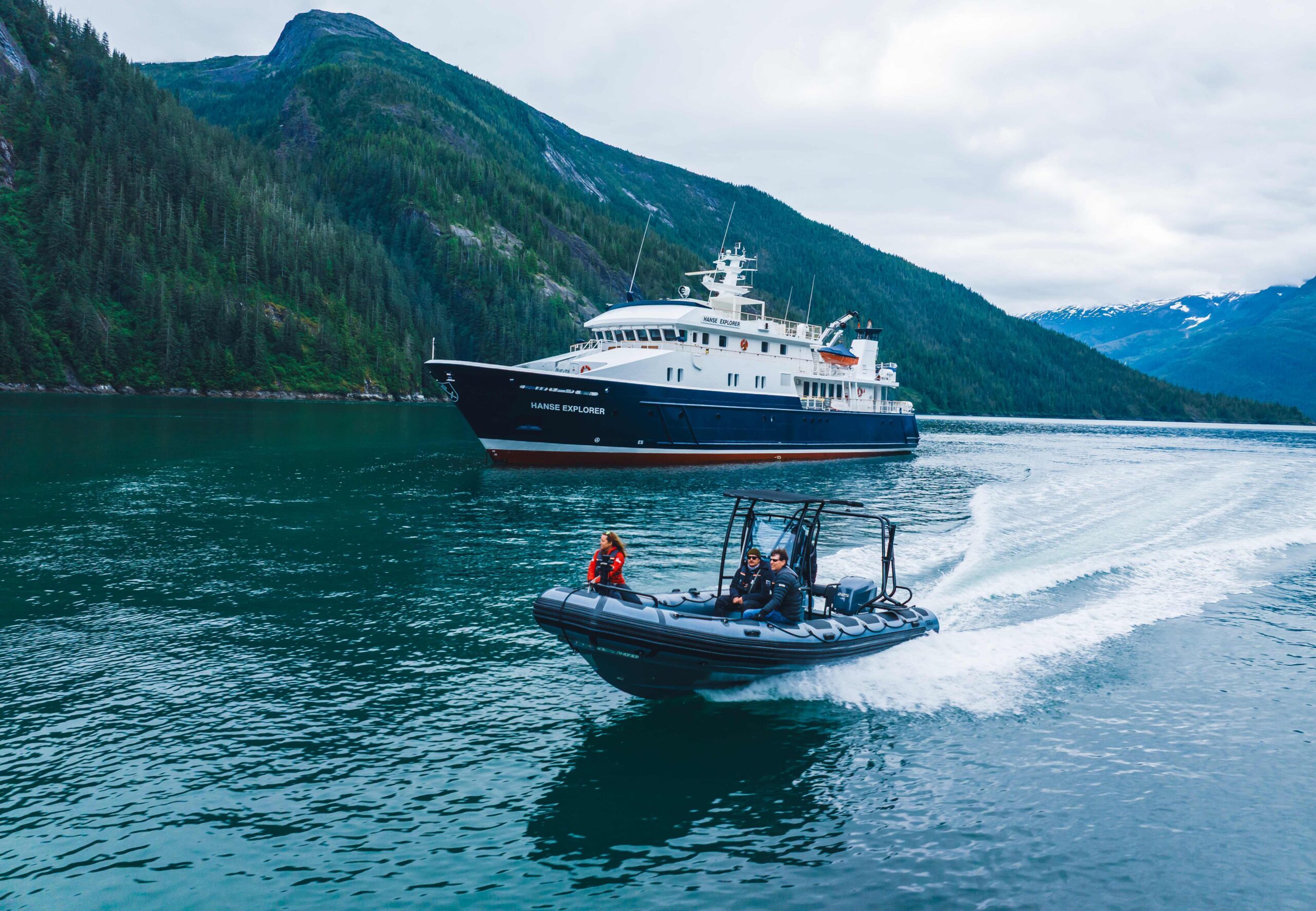
Each of these encounters can be woven into a fully customized private yacht expedition through Southeast Alaska, and Hanse Explorer will return here for the summer season of 2027. To explore availability and begin designing your journey, contact us at [email protected].