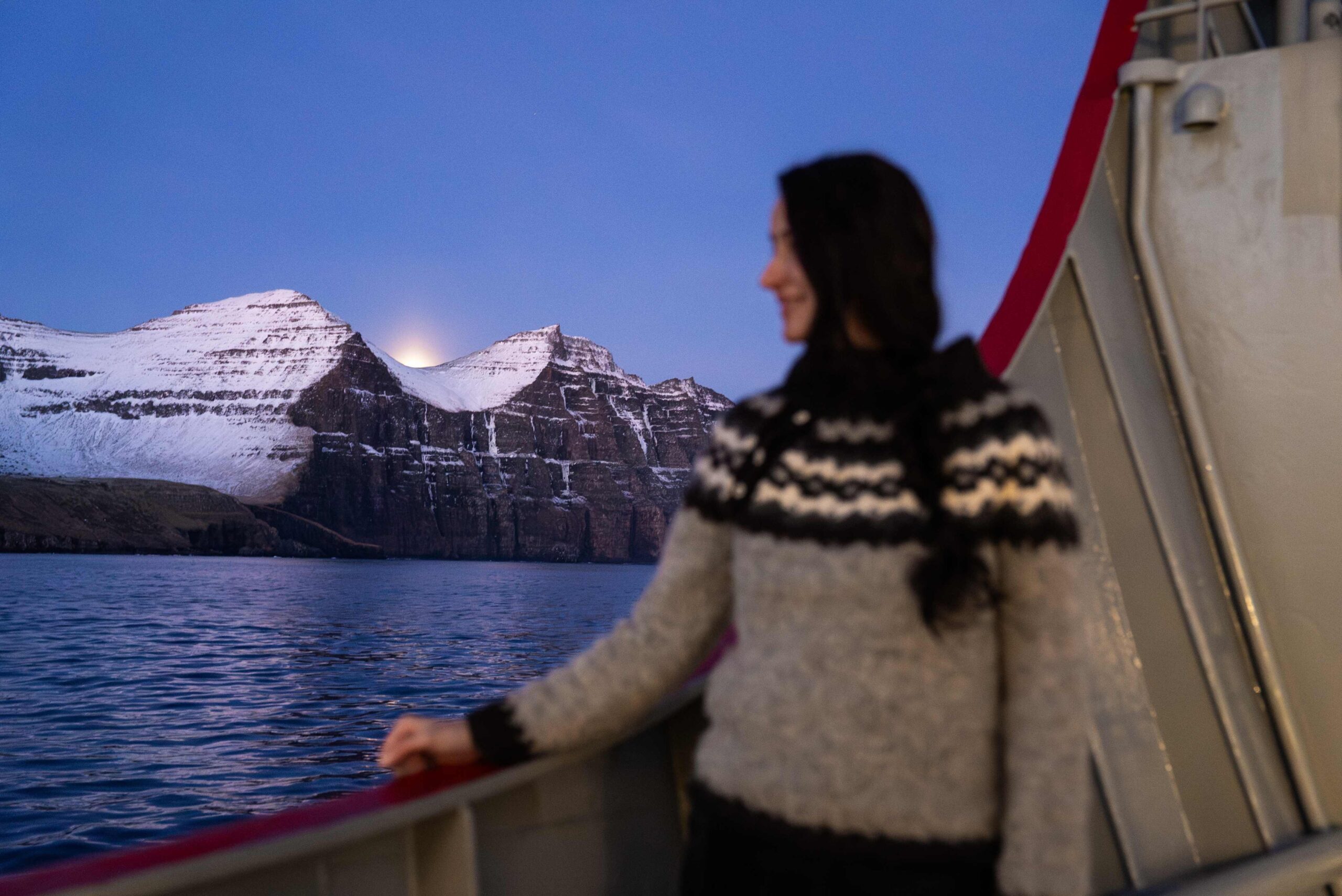
Winter changes Iceland completely. The roads empty, snow pushes deep into the mountains, fishing villages grow quiet, and entire fjords seem to disappear into silence. Most travelers never experience the country this way. Fewer still explore it by sea.
Aboard Vikingfjord, EYOS offers access to two vastly different regions of Iceland during its most atmospheric season: the remote East Fjords and the untamed Westfjords. While both voyages are rooted in expedition travel and flexibility, they feel entirely distinct from one another, like two separate countries connected only by weather and water.
The East is inward-looking: dramatic mountain passes, geothermal landscapes, cultural encounters, and long explorations into Iceland’s frozen interior. The West is shaped by the ocean: wildlife, storm-carved coastlines, Arctic surfing, and the constant improvisation that comes with exploring the North Atlantic in winter. Together, they reveal two sides of Iceland few travelers ever see.
-
East Iceland: Fjords, Highlands, and Geothermal Wilderness
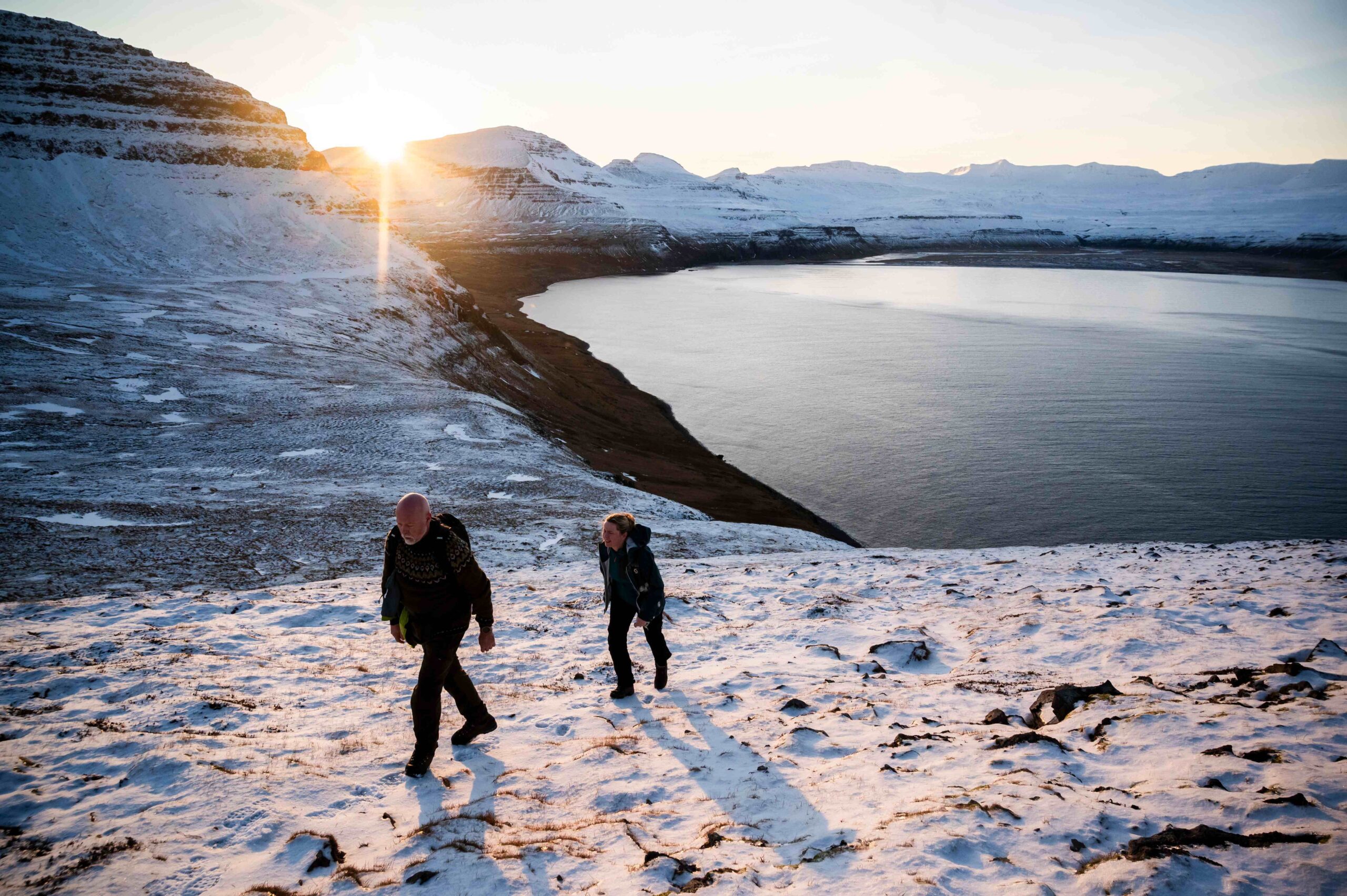
The East Fjords remain one of Iceland’s least-visited regions in winter. Operating from late January through April, Vikingfjord opens access to a landscape of glacial valleys, remote mountain passes, and isolated coastal settlements that few travelers ever reach during this season.
The journey begins in Borgarfjörður Eystri, reached by driving over the dramatic Dyrfjöll mountain pass where rugged peaks and snow-covered valleys immediately set the tone for the expedition. Small fishing villages sit quietly beneath towering mountains, and the pace of travel slows almost instantly.
Exploration in the East feels deeply tied to the land itself. Zodiac landings on black-sand beaches lead to snowshoe hikes through abandoned settlements once inhabited by coastal farmers. Guests venture into frozen valleys by Superjeep, crossing snow-swept highlands to hidden geothermal sites like Laugavalladalur, where warm water cascades down a cliff into a natural pool surrounded by snow.
There is a constant interplay between wilderness and warmth here. One afternoon may be spent kayaking beneath sheer sea cliffs or hiking across a remote mountain pass above Viðfjörður. By evening, guests return to Vikingfjord for sauna sessions, fjord cruising, and dinners anchored beneath snow-covered peaks.
The East Fjords also feel deeply human. Villages like Seyðisfjörður and Mjóifjörður remain central to the experience, with opportunities to meet local hosts, share rustic meals, and experience a quieter side of Icelandic life rarely encountered along the country’s more traveled routes. Horseback riding along fjords near Neskaupstaður offers another connection to the region — moving slowly through snow-covered meadows aboard Icelandic horses that have shaped life here for centuries.
Toward the southeast, the landscape grows even more dramatic. Guests may explore the glaciers of Heinabergsjökull or Hoffellsjökull either on foot or by kayak among drifting blue icebergs before continuing to Vestrahorn, where jagged peaks rise directly from black sand beaches in one of Iceland’s most cinematic landscapes.
Even the final departure feels rooted in the geothermal rhythms of the region, ending with a soak in the floating pools of Vök Baths before returning to Egilsstaðir.
-
Westfjords: Iceland’s Arctic Frontier
Where the East Fjords feel introspective, the Westfjords feel untamed.
Departing from Ísafjörður, Vikingfjord ventures into a maze of dramatic fjords, towering basalt cliffs, isolated anchorages, and open Arctic water. This is a landscape shaped entirely by weather and sea conditions, and the expedition embraces that unpredictability completely.
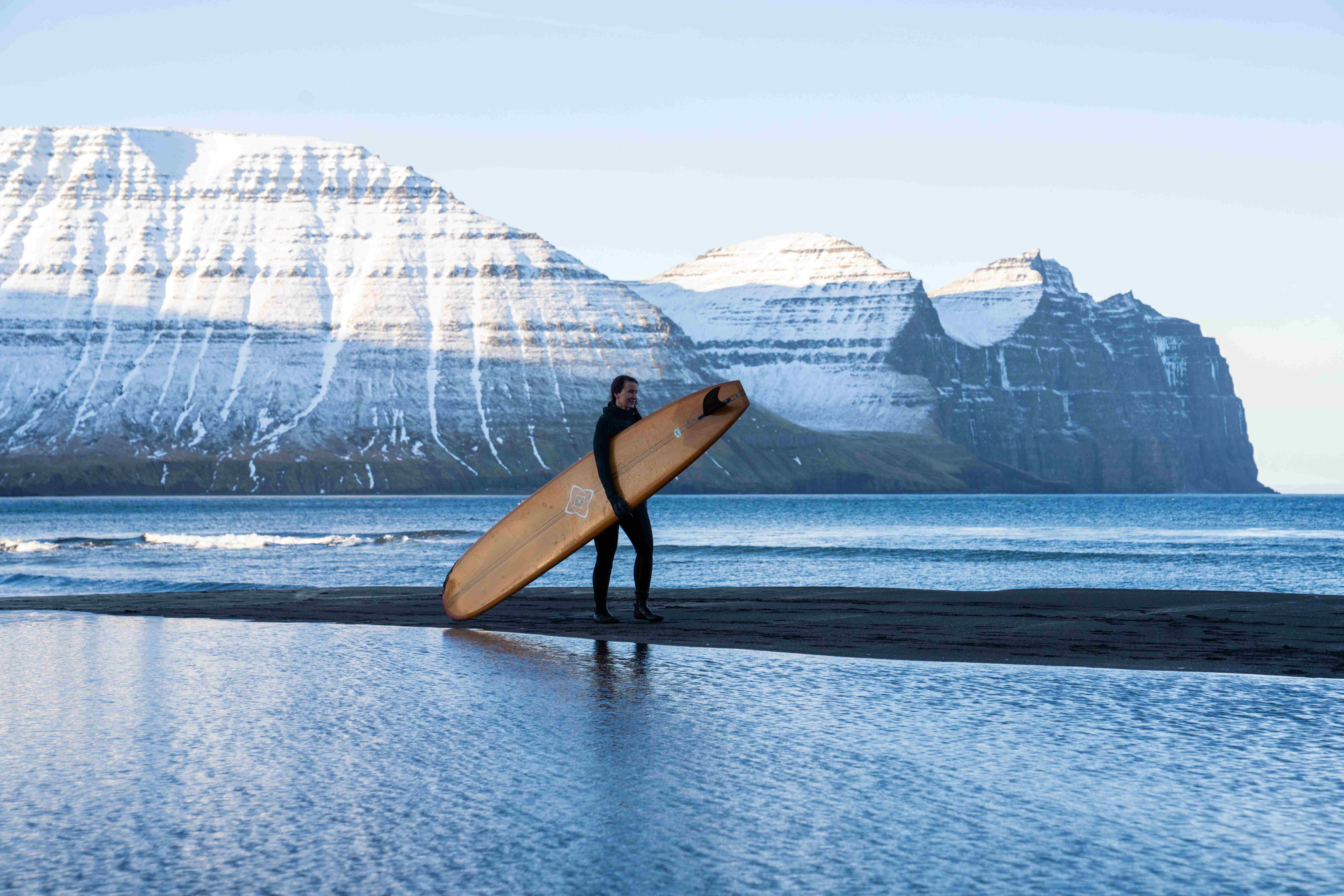
Rather than following a rigid itinerary, the captain and expedition leader adapt each day according to the wind, swell, wildlife activity, and light. Calm conditions may lead to stand-up paddleboarding through mirror-flat fjords where only seabirds disturb the silence. A changing swell could create opportunities for Arctic surfing beneath snow-covered mountains. On mist-covered mornings, the expedition may instead explore isolated fishing villages, hidden geothermal pools, or narrow fjord systems by Zodiac.
Life in the Westfjords revolves around the water. Guests scan for whales directly from the bridge while repositioning quietly along the coastline. Seals appear along rocky shores, eagles circle above the cliffs, and remote stretches of coastline can only be reached by boat.
One of the defining moments of the voyage is entering Hornstrandir Nature Reserve — often described as the crown jewel of the Westfjords. Abandoned by human settlement decades ago, the peninsula has returned almost entirely to nature. Here, guests hike across rolling tundra and dramatic coastal ridgelines with a strong likelihood of encountering Arctic foxes, Iceland’s only native land mammal.
Adventure in the Westfjords feels more ocean-oriented than in the East. Guests may fish for cod directly from the ship before the chef prepares the catch for dinner that evening. Zodiac cruises beneath seabird cliffs reveal inaccessible stretches of coastline, while guided E-bike rides follow gravel roads that disappear into remote coastal valleys.
Yet even with its adventurous spirit, the Westfjords retain moments of stillness. Returning to the ship after a cold-water surf session or a long coastal hike, guests gather in the sauna or hot tub beneath Arctic skies, often with the possibility of Northern Lights overhead.
The Westfjords are Iceland at its most raw — dramatic, weather-shaped, and deeply connected to the sea.
-
One Vessel, Two Entirely Different Expeditions
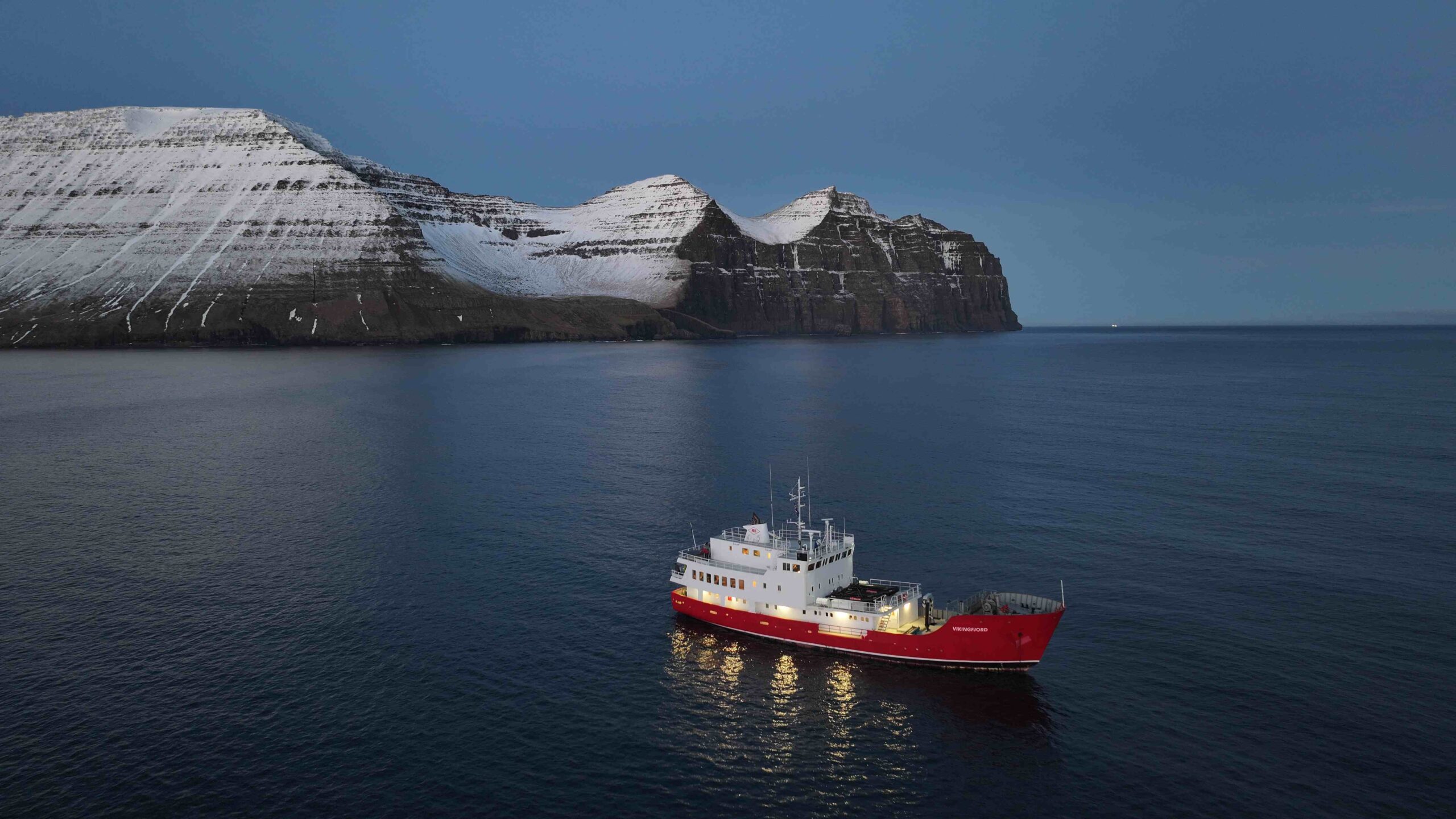
At the center of both journeys is Vikingfjord itself — a small expedition vessel rebuilt specifically for Arctic exploration. Carrying just 12 guests, the ship combines access and comfort with an ice-strengthened hull, Zodiac capability, panoramic lounge spaces, and an onboard sauna and hot pool overlooking the fjords.
More than anything, the vessel allows Iceland to be experienced in a different way. Rather than traveling by road from hotel to hotel, guests move with the landscape itself, waking each morning in a new fjord, adapting to changing conditions, and accessing places unreachable through traditional itineraries.
But despite sharing the same vessel, these expeditions feel remarkably distinct.
The East Fjords are geothermal, cultural, and grounded in Iceland’s interior landscapes — a journey through frozen valleys, quiet villages, and glacial wilderness.
The Westfjords are maritime and untamed — shaped by Arctic weather, wildlife encounters, and exploration along one of Europe’s last truly wild coastlines.
Both reveal an Iceland that exists far beyond the country’s famous southern route. And both offer something increasingly rare in modern travel: genuine discovery in complete winter silence.