
Few stretches of water carry the mythology of the Drake Passage. Separating Cape Horn from the Antarctic Peninsula, this 600-mile corridor marks the point where the Atlantic, Pacific, and Southern Oceans converge without interruption from land. Wind circles the globe unimpeded, swells build over thousands of miles, and weather systems move quickly and without warning. For decades, the Drake Passage has become shorthand for the journey to Antarctica itself — a rite of passage for travelers heading south toward the White Continent. And yet, despite its reputation, crossing the Drake aboard an expedition yacht is a very different experience than most travelers expect.

-
What Is It Like to Cross the Drake Passage on an Expedition Yacht?
There is no single Drake Passage crossing. Some voyages deliver calm seas and mirror-like conditions, known famously as the “Drake Lake.” Others live up to the region’s reputation with rolling swells, strong winds, and dramatic Southern Ocean weather — the “Drake Shake.” Most crossings fall somewhere in between.
To deal with this range of conditions, modern expedition yachts are purpose-built for polar conditions, equipped with advanced navigation systems, stabilizers, experienced crews, and extensive safety infrastructure.
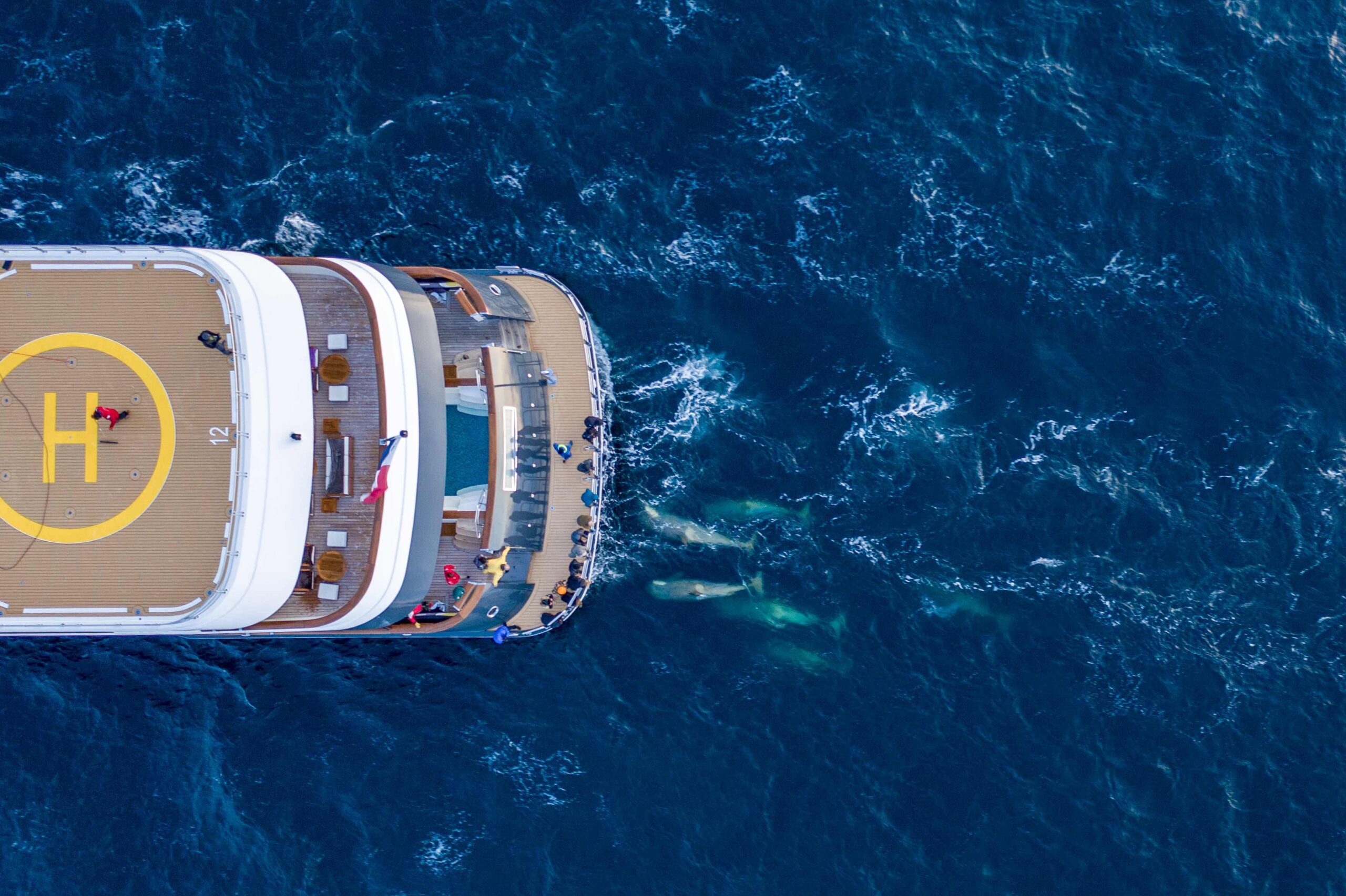
What’s more, aboard a well-equipped expedition yacht, the experience becomes far more intimate and connected to the environment than it would aboard a large cruise ship. You remain close to the water. You notice subtle shifts in weather and sea state. Wildlife encounters feel immediate rather than distant.
Days aboard are shaped by the rhythm of the crossing itself. Guests gather on deck scanning for wandering albatross, petrels, and whales. Expedition leaders host lectures on Antarctic wildlife, oceanography, and exploration history. Meals stretch long as conversations shift between weather reports and the excitement of first landfall. Outside, the Southern Ocean continues uninterrupted in every direction.
-
The Advantages of Crossing on a Small Expedition Yacht
The instinct is often to bypass the Drake entirely. Fly over it quickly, minimize the crossing, and reach Antarctica as efficiently as possible. But there are benefits to taking the slower route.
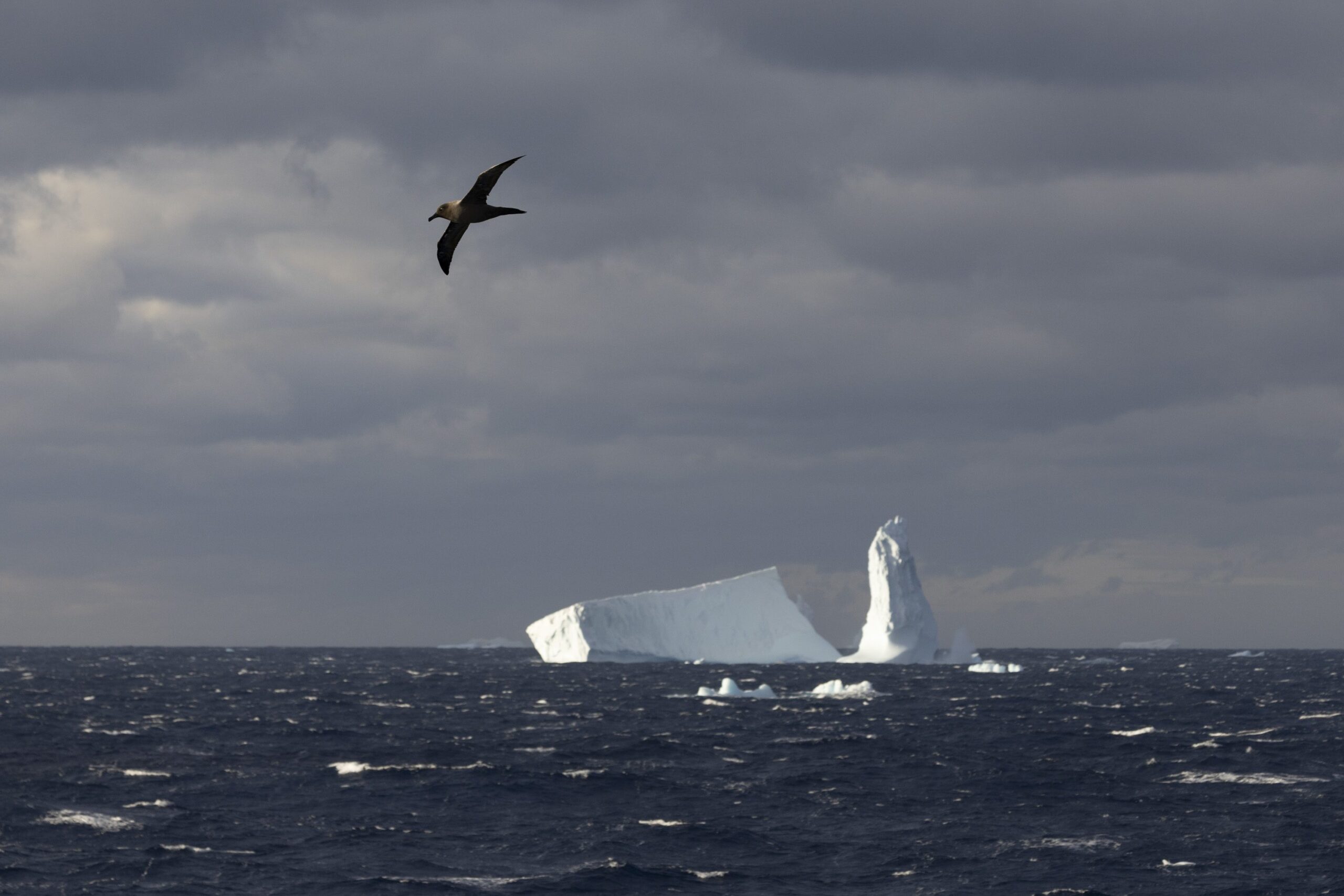
Antarctica is one of the last truly remote places on earth, and the gradual transition south matters. The Drake Passage creates a sense of separation from the rest of the world. Slowly over the course of the crossing, the horizon empties, albatross begins to appear behind the wake and the air sharpens with cold. Aboard an expedition yacht, this all comes together as a slow unfolding that emphasizes just how isolated the continent truly is.
Smaller expedition yachts also create a fundamentally different atmosphere onboard during the crossing. There are no crowded observation decks like aboard the larger cruise ships. Instead, the experience feels personal and deeply immersive. Guests often develop a close relationship with the crew, expedition guides, and fellow travelers during the crossing south. By the time Antarctica appears on the horizon, the voyage already feels fully underway rather than simply in transit.
-
Wildlife Encounters in the Drake Passage
For many travelers, the Drake Passage becomes an unexpected wildlife destination in its own right. The nutrient-rich waters of the Southern Ocean support an extraordinary concentration of seabirds and marine life. Wandering albatross glide effortlessly across the swells with wingspans reaching over 11 feet. Cape petrels dart low across the water. Hourglass dolphins occasionally surf the bow wave. Whale sightings become increasingly common further south, particularly during the austral summer.
Crossing by yacht offers a uniquely low-to-the-water perspective on these encounters. Wildlife appears at eye level rather than from several decks above, creating moments that feel remarkably close and unscripted.
-
Arriving in Antarctica by Sea
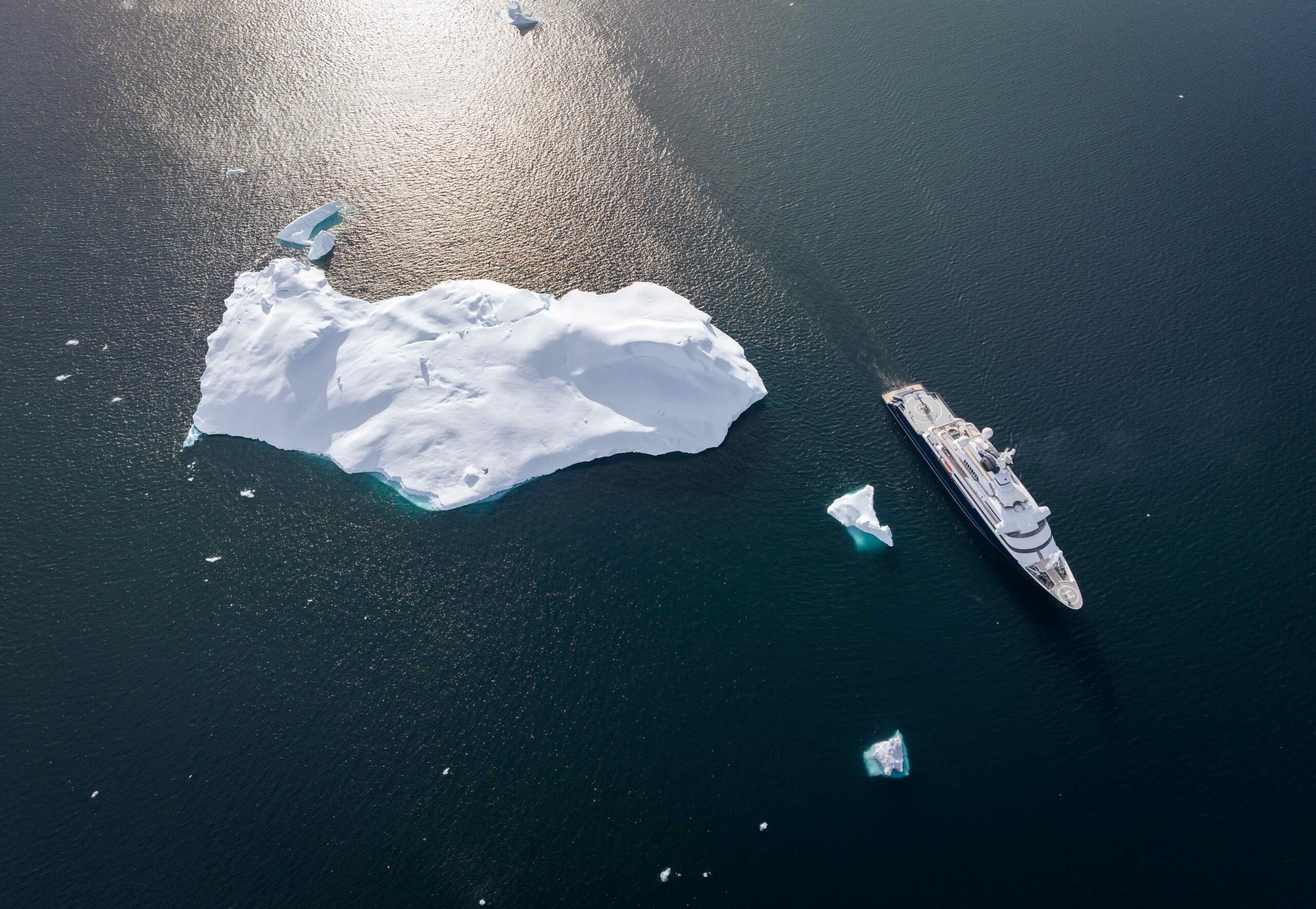
Then, almost suddenly, Antarctica appears. Dark mountains rise through fog. Icebergs drift along the horizon. Snow gathers across black cliffs alive with seabirds. After days surrounded only by open ocean, the first sight of land feels surreal. Arriving by sea changes your relationship with Antarctica itself.
You understand the scale of the Southern Ocean. You feel the distance from civilization. You experience the continent not as a destination reached instantly, but as a place gradually revealed through weather, water, and patience.
That is the enduring appeal of crossing the Drake Passage aboard an expedition yacht. Not simply the crossing itself, but the transformation that happens somewhere between South America and Antarctica — when the modern world falls away and the expedition truly begins.